
VRB Labs Alternative for Veteran Wellness in 2026
Editorial Team
Table of Contents
- What VRB Labs Users Look for in a Veteran Wellness Alternative
- What Does the VA Give for Chronic Pain?
- How Veteran-Owned Health and Wellness Brands Compare
- Natural Stress Relief for Veterans: What the Product Lineup Covers
- Cost, Access, and Evidence: Rating Each Veteran Wellness Option
- How to Evaluate Any Veteran Wellness Alternative in 2026
- Frequently Asked Questions
Last Updated: September 16, 2026
What VRB Labs Users Look for in a Veteran Wellness Alternative
Veterans searching for a vrblabs alternative for veteran wellness want a routine that fits service-connected pain, disrupted sleep, and a civilian schedule that never matches military structure. This guide breaks down how to judge any option: transparent ingredient lists, a clear purpose per product, and a brand that understands the veteran experience.
The Three Questions That Decide It
- What is actually in it? Full ingredient disclosure, not a vague "proprietary blend" with no amounts.
- Does it fit my day? Drops and capsules that travel well beat powders and shakers that need a kitchen.
- Who is behind it? A founder who has lived the recovery process tends to build differently than a brand chasing a demographic.
What Does the VA Give for Chronic Pain?
The VA's chronic pain approach typically starts with clinical care: assessment, physical therapy, pain management referrals, and in many cases prescription medication. Veterans can also pursue disability benefits for service-connected conditions, and VA facilities offer behavioral health and recreation therapy programs alongside standard treatment. The VA official health benefits information is the authoritative starting point for what's covered.
Where Supplements Fit Beside Clinical Care
A supplement is not a replacement for clinical care, and any brand claiming otherwise should be disqualified. The realistic role is complementary: supporting sleep quality, stress response, and daily energy so the clinical plan has a better foundation.
How Veteran-Owned Health and Wellness Brands Compare
"Veteran-owned" is one of the most abused labels in wellness, and also one of the few signals that predicts how a brand behaves. It gets applied to three very different kinds of companies, and treating them as one category is why so many veterans end up disappointed.
The Three Tiers Behind the Label
Tier 1, Veteran-founded and veteran-operated. The founder served, still runs the company, and built the product line around a personal recovery problem. These brands tend to disclose full ingredient amounts because the founder is the customer. The trade-off is scale: smaller catalogs, less distribution, slower shipping.
How to Verify a Veteran-Owned Claim in About Ten Minutes
- Check the state business registration for the legal name and officers, not just the label brand.
- Look for a named founder with a verifiable service record, not an anonymous "founded by veterans" line.
- Read the ingredient panel, not the About page. Full amounts per ingredient is the strongest Tier 1 signal.
- Check whether the story survives contact with the catalog. A founder who built around service-connected sleep and pain usually has products aimed at those problems, not a generic multivitamin with a flag on the label.
- Confirm the return policy is plain with no restocking fee buried in the fine print.
Where the Categories Actually Diverge
| What to Compare | Strong Signal | Weak Signal |
|---|---|---|
| Ingredient disclosure | Amounts listed per ingredient | "Proprietary blend," no amounts |
| Format fit | Drops or capsules that travel | Powders needing a shaker and a kitchen |
| Serving math | Daily cost stated or easy to calculate | Bundles that hide the per-day price |
| Founder story | Named, verifiable, still involved | Anonymous, past tense, or acquired |
| Return terms | Clear window, no hidden conditions | Restocking fees, store credit only |
Global Wellness Alliance sits in Tier 1 by that standard: founded by a 100% disabled combat veteran with over 28 years of military service, with a catalog built around stress, sleep, and daily energy in formats that work away from home.
| Need | Product | Format | Price | Best For |
|---|---|---|---|---|
| Daily stress balance | Reishi Calm Drops | Liquid drops | $38.90 | High-stress routines, on-the-go use |
| Immune and resilience support | Adaptogen Immunity Drops | Liquid drops | $38.90 | Active lifestyles, demanding schedules |
| Energy and cognitive support | Ashwagandha Plus | Capsules | $38.50 | Stamina, focus, daily vitality |
| Sleep quality | Sleep Support | Capsules | $38.90 | Unwinding, restful nights |
| Weight management | Diet Drops Ultra | Liquid drops | $41.90 | Active routines, balanced nutrition |
Natural Stress Relief for Veterans: What the Product Lineup Covers
Natural stress relief for veterans works best when it targets the pressure points of post-service life: an overactive startle response, difficulty winding down, and sleep that never fully resets. A practical routine addresses each separately rather than expecting one product to do everything.

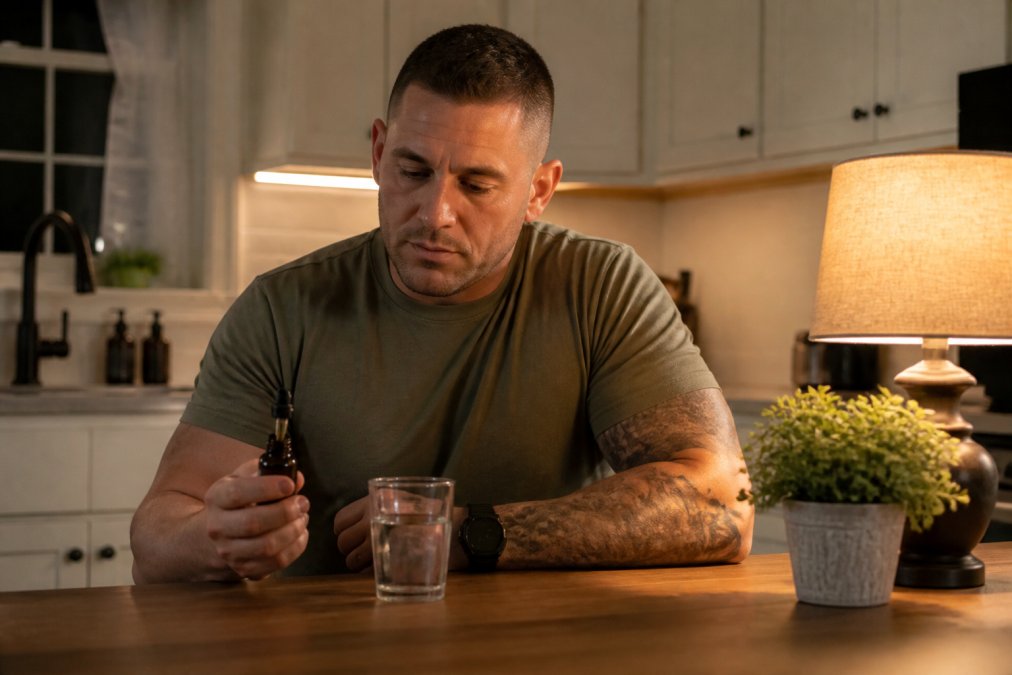
Sleep Support and Reishi Calm Drops
Sleep is where most veterans report the fastest difference, and it's the category worth getting right first. Sleep Support combines magnesium citrate and vitamin B6 with melatonin, plus chamomile, passion flower, lemon balm, GABA, L-theanine, ashwagandha, and 5-HTP. Two capsules 20 to 30 minutes before bed is the suggested routine.
Cost, Access, and Evidence: Rating Each Veteran Wellness Option
Most veteran wellness content rates products on marketing claims. This section gives you a scoring method you can apply to any option.
The Three Axes That Actually Matter
Every wellness option, a supplement, an app, a peer support group, a therapy program, sits on three axes:
- Accessibility, how fast, how cheaply, and how reliably can you start and keep using it?
- Cost, the true daily or monthly commitment, not the sticker price?
- Evidence, the strength of the underlying research versus anecdotal reports?
Scoring Accessibility
Rate each option from 1 to 5 on these questions:
- Can you start within a week without a referral or a waitlist?
- Does it require a prescription, a diagnosis, or a service-connected rating?
- Does it work if your schedule changes without notice?
- Does it require equipment, a facility, or a specific location?
- Can you stop and restart without penalty?
Scoring Cost Honestly
Sticker price is the least useful number here. What matters is cost per day of actual use, and whether you'll keep using it past the first month.
- Supplements: divide total price by days of supply. A $38.90 bottle delivering a 30-day supply is roughly $1.30 per day. Run the same math on subscription bundles, which often hide a higher per-day cost behind a "discount."
- Apps: free tiers are common; paid tiers run monthly or annually. Check whether the free tier covers what you need before upgrading.
- Peer support: usually free, but the real cost is time and travel.
- Therapy programs: cost varies widely and may be partially covered depending on eligibility and benefits.
- Retreats: the highest per-day cost here, and most likely to produce a short-term boost that fades without a follow-on routine.
Scoring Evidence Without Overselling It
This is where most comparisons fall apart, because "clinically studied" means almost anything. Use this three-level scale:
- Level 1, Established. The ingredient or practice has a body of published research behind it and is widely recognized in clinical settings. Examples include magnesium and melatonin for sleep support, and structured physical activity for chronic pain management.
- Level 2, Promising. Some research exists, often small or preliminary, and traditional use supports it. Many adaptogens, including ashwagandha and reishi, sit here. The evidence is real but not settled.
- Level 3, Anecdotal. The main support is user reports and traditional use, with little or no controlled research. Not worthless, but it should not be the foundation of a routine.
Putting the Three Axes Together
| Criterion | What to Check | Why It Matters |
|---|---|---|
| Ingredient transparency | Full amounts listed per ingredient | Lets you compare like for like |
| Format fit | Drops vs capsules vs powders | Determines whether you will actually use it |
| Daily cost | Total price ÷ days of supply | Reveals the real monthly commitment |
| Founder credibility | Verifiable service background | Signals who the product was built for |
| Return policy | Clear terms, no hidden conditions | Protects you if it does not fit |
| Evidence level | Level 1, 2, or 3 per ingredient | Separates research from marketing |
Run this against any option, supplement, app, peer group, therapy program, and you get a comparable profile in about fifteen minutes.
How to Evaluate Any Veteran Wellness Alternative in 2026
Use this checklist before committing to any brand, including this one.
- Confirm every ingredient is listed with an amount, not hidden in a blend
- Check the format against your actual daily routine, not an ideal one
- Calculate daily cost, not just the listed price
- Verify the founder's background independently
- Read the return policy in full before ordering
- Start with one product, not a bundle, and evaluate over 30 days
- Tell your physician what you're taking, especially if you're on prescriptions
- Reassess at 60 days and drop anything you can't clearly justify
Frequently Asked Questions
What should veterans look for in natural stress-relief supplements?
Look for a clear ingredient list with amounts per serving, a stated suggested use, and a manufacturer country. Reishi Calm Drops, for example, list reishi mushroom extract at 150 mg plus a mushroom complex, and a daily 1 ml dose. Check whether the formula fits your routine (drops versus capsules), whether it is sweetened or contains added sugar, and whether the label warns anyone with a medical condition to consult a physician first. Bring the label to your VA provider before adding anything to a current prescription.
How do veteran-owned health and wellness brands differ from standard supplements?
The main difference is often transparency and mission rather than the ingredients themselves. Veteran-owned brands tend to publish full ingredient amounts, state the manufacturer country, and explain why the product exists. Global Wellness Alliance, for instance, was founded by a 100% disabled combat veteran with over 28 years of military service, and its catalog pairs supplements with lifestyle apparel. That background does not replace evidence, so still judge each product on its label, dosage, and how it fits your care plan.
What does the VA give for chronic pain?
VA chronic pain care usually starts with a stepped approach: self-management and movement, then non-opioid options such as physical therapy, topical treatments, and behavioral health support, with opioid therapy considered only in specific cases. Because coverage and referrals vary by facility and by your service-connected rating, the practical step is to ask your VA primary care team what is covered for your diagnosis and whether community care is an option. Supplements are not a substitute for that clinical care.
Can a supplement replace VA care or PTSD treatment?
No. Dietary supplements are not intended to diagnose, treat, cure, or prevent any disease, and they do not replace therapy, medication, or clinical care. The useful role for products like Adaptogen Immunity Drops or Ashwagandha Plus is supporting general wellness alongside the care you already receive. Tell your provider about everything you take, especially if you use sleep aids, blood thinners, or mood-related medications, so interactions and timing can be checked.
How do I pick a veteran wellness alternative without wasting money?
Start with one problem, not five. If sleep is the issue, try a single sleep-focused product such as Sleep Support at $38.90 and give it a defined trial window before adding anything else. Compare cost per serving rather than bottle price, confirm the suggested use fits your schedule, and check the refund or shipping terms before ordering. Buying one targeted product beats stacking three at once, because you can actually tell what helped.