
How to Choose Daily Supplements: A 2026 Guide
Grandranker
Table of Contents
- What Actually Matters When You Choose Daily Supplements
- How to Read Supplement Labels Without Getting Lost
- How to Verify Supplement Purity Before You Buy
- Matching Daily Supplements to Your Specific Health Goals
- Drug-Supplement Interactions and Upper Limits You Should Know
- When to Consult a Doctor About Supplements
- Budgeting Smart: Cost-Per-Serving and Ethical Sourcing
- Conclusion
What Actually Matters When You Choose Daily Supplements
Most people approach this decision backwards. They see a compelling label, read a few reviews, and buy. Then they wonder why three months later nothing has changed. Global Wellness Alliance has worked with veterans, active-duty personnel, and health-conscious professionals long enough to know that the supplement aisle rewards the informed buyer, and punishes everyone else.
Daily supplements are dietary products taken routinely to support nutrient intake, recovery, or specific health goals. The challenge is that the supplement industry operates under lighter regulatory oversight than pharmaceuticals. The FDA does not approve dietary supplements before they reach store shelves, meaning the burden of vetting quality falls entirely on you as the consumer.
Below, you'll find a practical framework for evaluating any supplement before you spend a dollar on it, from reading a Supplement Facts label to calculating true cost-per-serving.
Third-Party Certification and Testing Seals
Third-party certification is the single most reliable quality signal available to supplement buyers. Because the FDA does not pre-approve dietary supplements, independent testing organizations fill the gap by verifying that a product contains what its label claims, at the stated potency, without harmful contaminants.
The most recognized seals come from organizations like NSF International, USP (U.S. Pharmacopeia), and Informed Sport. Each program tests for active ingredients, heavy metals, banned substances, and label accuracy. According to NSF International's dietary supplement certification program, certified products are tested for more than 270 athletic banned substances in addition to standard purity and potency verification.
Bioavailability: Why Form Matters More Than Dose
A common mistake is fixating on the milligram count on a label without asking how much of that dose the body actually absorbs. Bioavailability, the proportion of a nutrient that enters circulation and produces an active effect, varies dramatically by form.
Magnesium oxide is cheap and widely used, but its absorption rate is significantly lower than magnesium glycinate or magnesium malate. A supplement with a lower dose in a highly bioavailable form will often outperform a higher-dose product in a poorly absorbed form. Look for terms like "chelated," "methylated" (for B vitamins like folate and B12), "liposomal," or "standardized extract" on the label.
How to Read Supplement Labels Without Getting Lost
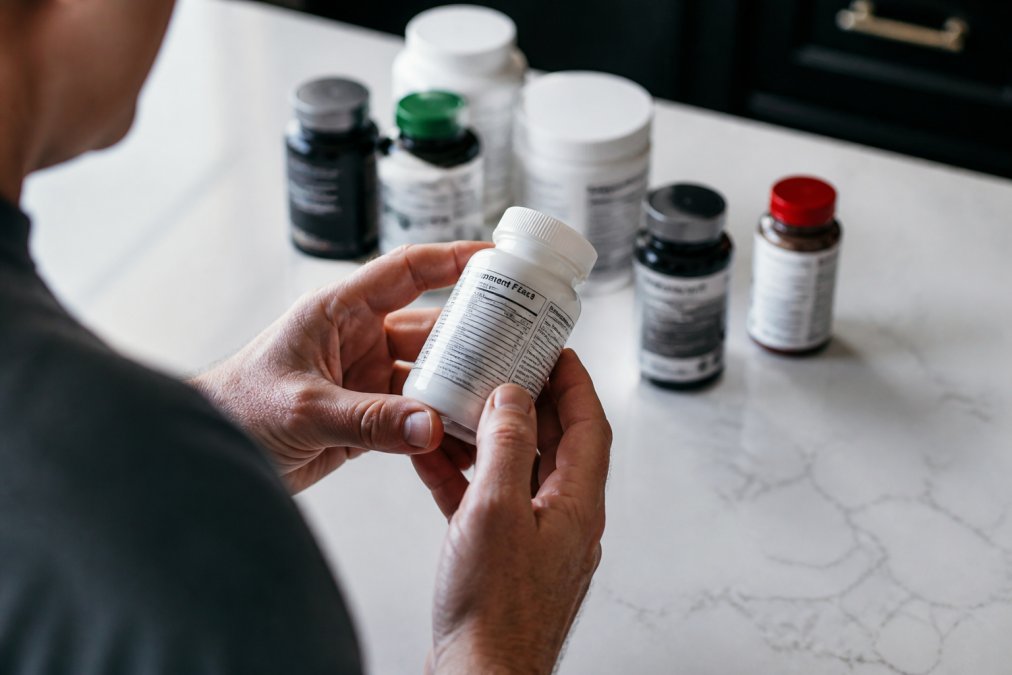
Reading supplement labels accurately is the foundational skill for choosing daily supplements wisely. The Supplement Facts panel is a legally required disclosure that becomes one of your most useful tools once you know how to decode it.
Decoding the Supplement Facts Panel
The Supplement Facts panel tells you the serving size, the number of servings per container, and the amount of each active ingredient per serving. It also shows the % Daily Value (DV), the percentage of the recommended daily intake that one serving provides.
Pay attention to:
- Serving size vs. container size. A bottle showing "60 capsules" at a serving size of 4 capsules contains only 15 servings. This affects both cost-per-serving and how long the supply lasts.
- Proprietary blends. When a label lists a "proprietary blend" with a combined weight but no individual ingredient amounts, you cannot verify whether any single ingredient is present at a clinically meaningful dose.
- % Daily Value gaps. Some ingredients have no established DV, listed as "†" on the label. Treat these with extra scrutiny.
Red Flags in Health Claims and Ingredient Lists
The FDA distinguishes between structure/function claims ("supports immune health") and disease claims ("treats or cures diabetes"). Supplement manufacturers are permitted to make structure/function claims without FDA pre-approval, provided they add a disclaimer. If a label makes explicit disease treatment claims without a disclaimer, that's a regulatory violation and a signal to walk away.
Other red flags: proprietary blends that obscure individual dosages, ingredient lists padded with fillers or artificial dyes, and health claims using language like "clinically proven" without citing an accessible study.
How to Verify Supplement Purity Before You Buy
Supplement purity means the product contains only what the label states, free from contaminants like heavy metals, pesticides, microbial pathogens, and undisclosed pharmaceutical compounds.

Heavy Metals, Contaminants, and Certificate of Analysis
Heavy metal contamination, including lead, arsenic, cadmium, and mercury, is a documented concern in the supplement industry, particularly for products derived from plant materials. As documented in FDA guidance on heavy metals in dietary supplements, the agency has issued multiple warning letters and recalls related to contaminated supplement products.
A Certificate of Analysis (CoA) is a lab document that records the results of third-party testing for a specific product batch. Reputable brands make their CoAs publicly accessible. The CoA should confirm identity and potency of active ingredients, absence of heavy metals above acceptable limits, microbial testing results, and absence of banned substances.
If a brand cannot produce a CoA or refuses to share one, treat that as a disqualifying signal.
Matching Daily Supplements to Your Specific Health Goals
The supplement that's right for a competitive athlete differs significantly from what's appropriate for someone managing chronic fatigue or recovering from injury. Matching daily supplements to your actual situation is where most buyers go wrong.
Multivitamins vs. Targeted Supplements: Which Fits Your Situation
A multivitamin is designed to cover a broad range of micronutrients at moderate doses, functioning as nutritional insurance. A targeted supplement delivers a single nutrient or a small group of synergistic nutrients at therapeutic doses.
| Situation | Better Fit | Reason |
|---|---|---|
| Generally healthy, varied diet | Multivitamin | Fills gaps without excess dosing |
| Confirmed deficiency (e.g., vitamin D, B12) | Targeted supplement | Higher dose, precise form |
| Athletic performance support | Targeted supplement | Specific needs exceed typical DV |
| Recovery from illness or injury | Targeted supplement + multi | Therapeutic doses alongside baseline coverage |
| Busy lifestyle, inconsistent diet | Multivitamin | Convenient broad coverage |
For many people, the answer is a combination: a quality multivitamin for baseline coverage, with one or two targeted supplements addressing specific gaps.
Personalized Assessment: Using Blood Work and Symptom Tracking
The most defensible approach starts with knowing what your body actually needs. A standard blood panel can reveal deficiencies in vitamin D, B12, iron, and magnesium. Symptom tracking adds a qualitative layer: persistent fatigue, poor sleep quality, joint discomfort, and brain fog each point toward different nutritional priorities.
Many healthcare providers now offer functional nutrition panels that assess markers like homocysteine, ferritin, and omega-3 index. This approach matters especially for veterans and individuals managing service-connected conditions, where nutrient depletion from physical stress and medication use can be more pronounced.
Drug-Supplement Interactions and Upper Limits You Should Know
Drug-supplement interactions are one of the most under-discussed risks in the supplement space. Many commonly used supplements affect how the body metabolizes medications, sometimes reducing drug effectiveness, sometimes amplifying it to dangerous levels.
St. John's Wort activates liver enzymes that metabolize dozens of medications, including antidepressants, blood thinners, and certain antibiotics. Fish oil at high doses can increase bleeding risk in people taking anticoagulants. Even vitamin K can interfere with warfarin therapy.
According to NIH Office of Dietary Supplements drug interaction guidance, interactions between supplements and prescription medications are more common than most people realize, and many go unreported because patients don't mention supplement use to their physicians.
Every nutrient also has a Tolerable Upper Intake Level (UL), the maximum daily amount unlikely to cause adverse effects. Exceeding the UL for fat-soluble vitamins like A, D, E, and K carries real toxicity risk because these vitamins accumulate in tissue rather than being excreted.
When to Consult a Doctor About Supplements
Consult a doctor about supplements if you are pregnant or breastfeeding, managing a chronic condition, taking prescription medications, preparing for surgery, or dealing with a confirmed nutrient deficiency.
A registered dietitian (RD) or integrative medicine physician can interpret your bloodwork in the context of your health history, recommend evidence-based dosages, and flag interactions that a label won't warn you about. For veterans managing multiple service-connected conditions or complex medication regimens, this professional layer is particularly important.
Budgeting Smart: Cost-Per-Serving and Ethical Sourcing
Price is a legitimate factor in supplement selection, but the sticker price on a bottle is almost never the right number to compare.
Calculating True Cost-Per-Serving
The cost-per-serving calculation is straightforward: divide the total price by the number of servings in the container. A bottle priced higher than a competitor's may actually cost less per serving if it contains more servings or a higher dose per capsule.
- Find the serving size on the Supplement Facts panel
- Note the number of servings per container
- Divide the retail price by the number of servings
- Compare that figure across products
Legitimate price differences reflect third-party certification costs, bioavailable ingredient forms (chelated minerals, methylated B vitamins), manufacturing standards (cGMP-certified facilities), and supply chain transparency.
Sustainability and Ethical Sourcing Signals to Look For
Signals worth looking for: Marine Stewardship Council (MSC) certification for fish-derived ingredients, Rainforest Alliance or Fair Trade certification for botanical ingredients, Non-GMO Project Verified or USDA Organic for plant-based components, and country of origin disclosure for raw materials.
Brands that operate with genuine transparency publish sourcing information alongside their CoAs. At Global Wellness Alliance, the foundation of the brand is personal experience with recovery, built by a 100% disabled combat veteran who understands firsthand what it means to need products that actually work. That commitment to integrity shapes how GWA approaches every product decision, from ingredient selection to label transparency.
Supplement Vetting Checklist
Use this before purchasing any new daily supplement:
- Third-party certification seal present (NSF, USP, or Informed Sport)
- Certificate of Analysis available from the manufacturer
- Serving size and servings-per-container clearly stated
- No proprietary blends obscuring individual ingredient doses
- Bioavailable ingredient forms used (chelated, methylated, liposomal)
- Health claims include required FDA disclaimer
- No disease treatment claims without FDA approval
- Dosages within established Tolerable Upper Intake Levels
- Drug-supplement interactions checked against current medications
- Cost-per-serving calculated and compared (not just bottle price)
- Sourcing and manufacturing transparency verified
Choosing daily supplements well is genuinely hard work, and the industry's marketing machinery is designed to make it feel easier than it is. The framework in this guide will protect you from the most common and costly mistakes. Global Wellness Alliance exists to make that process less overwhelming, offering curated wellness solutions built on the same standards described here: third-party verified, transparently labeled, and grounded in real recovery experience. Explore the GWA product range and get started with supplements you can actually trust.
Frequently Asked Questions
How do I figure out what daily supplements I actually need?
Start with a blood panel from your primary care provider to identify actual nutrient deficiencies rather than guessing. Common gaps include vitamin D, magnesium, and B12, especially for people with demanding physical routines or restricted diets. Once you have lab results, you can target specific micronutrients instead of defaulting to a broad multivitamin. Tracking energy, sleep, and recovery for two to four weeks before and after adding a supplement also gives you a practical baseline to measure against.
Are daily supplements regulated by the FDA?
Dietary supplements are regulated by the FDA under the Dietary Supplement Health and Education Act (DSHEA) of 1994, but the rules differ significantly from those for prescription drugs. Manufacturers do not need FDA approval before selling a supplement. The FDA can act after a product is on the market if it proves unsafe. This is why third-party certification from organizations like NSF International, USP, or Informed Sport carries real weight: it provides independent verification of potency, purity, and label accuracy that regulatory oversight alone does not guarantee.
What should I look for when choosing a supplement brand?
Look for third-party certification seals, a transparent Supplement Facts label with clearly listed active ingredients and serving sizes, and a published Certificate of Analysis confirming the product has been tested for heavy metals and contaminants. Avoid brands that make vague health claims without clinical evidence, list proprietary blends without disclosing individual dosages, or cannot provide documentation on their sourcing and manufacturing standards. Label transparency and regulatory compliance are the fastest signals of a trustworthy brand.
Can supplements interact with prescription medications?
Yes, and the interactions can be clinically significant. Vitamin K can reduce the effectiveness of blood thinners like warfarin. High-dose fish oil may increase bleeding risk when combined with anticoagulants. St. John's Wort affects the metabolism of dozens of drugs. Before adding any new supplement to your routine, especially if you take prescription medications, review the combination with a pharmacist or physician. The NIH Office of Dietary Supplements maintains a free drug interaction database you can reference.
What two vitamins should not be taken together?
High doses of vitamin E and vitamin K can work against each other because vitamin E at supplemental levels may interfere with vitamin K's role in blood clotting. Calcium and iron are another pairing worth spacing out: taken together, calcium can reduce iron absorption by up to 60% depending on the dose and form. Timing matters as much as combination. Taking iron supplements separately from calcium-rich foods or calcium supplements, ideally two hours apart, largely resolves the absorption conflict.
How do I know if a supplement is actually pure and not contaminated?
Request or look up the product's Certificate of Analysis, a document from an independent lab confirming what is and is not in each batch. Third-party certification seals from NSF International, USP, or Informed Sport indicate the product was tested for heavy metals, contaminants, and label accuracy. Avoid supplements with proprietary blends that hide individual ingredient dosages, and check whether the brand publishes batch-specific test results rather than a single generic certificate.
This article was written using GrandRanker