
Daily Wellness Routine for Veterans: 7 Steps
Editorial Team
Table of Contents
- What You'll Need Before You Start
- Step 1: Set One Wellness Goal That Fits Your Body
- Step 2: Anchor Your Sleep With a Consistent Schedule
- Step 3: Add Daily Movement and Physical Activity
- Step 4: Use Veteran Chronic Pain Management Strategies
- Step 5: Build Daily Habits for Veteran Recovery
- Step 6: Use the VA Whole Health Program Benefits
- Step 7: Support Nutrition, Stress, and Mood Daily
- Frequently Asked Questions
Last Updated: September 11, 2026
What You'll Need Before You Start
A daily wellness routine for veterans works best when it starts smaller than you think. Most people burn out trying to change everything in week one.
Before you build anything, gather four things:
- A baseline: how you sleep, move, eat, and feel right now
- One measurable goal tied to your body's real limits
- A fixed wake time you can hold for 30 days
- A simple way to track progress, notebook or app
This Global Wellness Alliance guide walks through seven steps for people managing service-connected injuries, busy schedules, and life after service.
Step 1: Set One Wellness Goal That Fits Your Body
Pick one goal you can measure without guessing. "Get healthier" fails because you can't tell whether you hit it; "walk 15 minutes four days a week" succeeds because you can.
Start with your actual limitation, not the body you had before the injury. If your knee decides what kind of day you're having, build the goal around what it permits.
Write the goal with three parts: action, frequency, and condition. For example: "Do 10 minutes of gentle stretching every morning, unless pain is above a 5, in which case I do breathing work instead." That last clause keeps a flare-up from ending the routine.
Step 2: Anchor Your Sleep With a Consistent Schedule
Sleep hygiene starts with a fixed wake time, not a fixed bedtime. You can't force yourself to fall asleep, but you can force yourself to get up, and that resets your internal clock.
Choose a wake time you can hold seven days a week, weekends included. Then work backward: dim lights and put screens away in the hour before bed, keep the room cool and dark, and avoid caffeine after early afternoon. If you use a sleep supplement, take it at the same time each night so your body associates that cue with winding down. Our Sleep Support combines magnesium citrate and vitamin B6 with melatonin and botanicals like chamomile and passion flower.

Nightmares and hypervigilance are common after service, and they wreck sleep in ways standard advice ignores. If that's your situation, talk to your care team about it directly rather than white-knuckling it.
Step 3: Add Daily Movement and Physical Activity
Daily movement means something you can repeat without wrecking tomorrow. For most veterans managing old injuries, that's moderate exercise: walking, swimming, cycling, or bodyweight work, done at a pace where you could still hold a conversation.
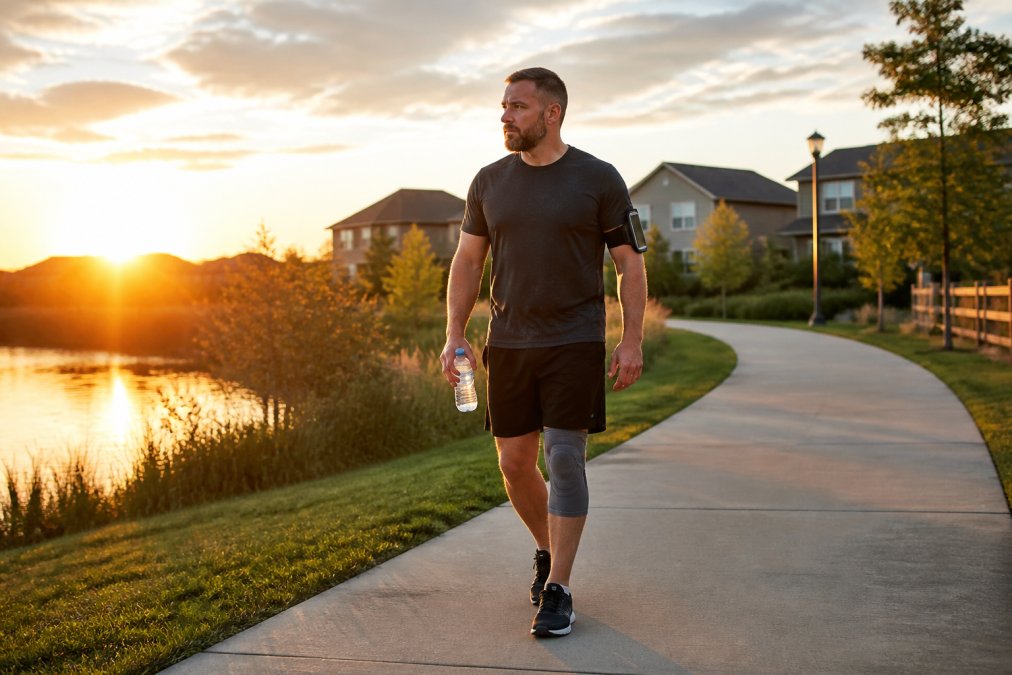
Aim for movement on most days, but keep sessions short enough that you're not paying for them for two days afterward. The CDC physical activity guidelines recommend adults get at least 150 minutes of moderate activity per week, which breaks down to roughly 20 to 30 minutes on most days. If your body can't handle that yet, start where you are and build.
Walking counts. Stretching counts. Ten minutes counts. The point is consistency, not intensity.
The Transition Problem Nobody Warns You About
Most wellness content assumes you're starting from zero. If you served, you probably aren't. You spent years with movement built into your day, formation runs, unit PT, organized sports, a gym you didn't have to think about. Then that structure disappeared, replaced by a civilian fitness landscape that assumes you'll motivate yourself, pay for access, and know what to do when you walk in.
That gap is the biggest reason veterans who were highly active in uniform become sedentary within a year or two of separating. The fix isn't more willpower, it's rebuilding the structure deliberately:
- Put movement on a schedule, not a mood. Same time, same days, the way PT was. A 0600 walk Monday, Wednesday, and Friday beats "whenever I feel like it."
- Make it social if you can. A walking partner, gym buddy, group class, or virtual workout with someone who expects you to show up.
- Lower the bar for what counts. Ten minutes of stretching after coffee is a legitimate training day.
- Track it visibly. A calendar with an X on every day you moved is enough.
Adaptive and Low-Impact Movement Options
If you're managing a service-connected injury, chronic pain, a prosthetic, a spinal cord injury, or balance issues, the standard exercise list may not fit, but movement isn't off the table. You pick from a different menu:
- Water-based movement. Warm-water walking, swimming, and aquatic therapy reduce joint load while still working the cardiovascular system. Many VA facilities and community pools offer adaptive aquatics.
- Recumbent cycling. Back support and a reclined position take pressure off the spine and knees while still letting you push.
- Chair-based and seated mobility. Range-of-motion work, seated marching, resistance bands anchored to a chair, all count and all work on bad days.
- Adaptive sports and recreation. Wheelchair basketball, adaptive rowing, handcycling, seated volleyball, and sled hockey are organized in most regions through VA recreation therapy and community programs.
- Assisted and supported walking. A trekking pole, rollator, treadmill with handrails, or a walking partner's arm can turn a fall risk into a workout.
- Modified yoga and tai chi. Both have seated and supported variations, commonly offered through VA Whole Health programs.
A physical therapist familiar with amputee, spinal cord, or chronic pain populations can translate a general routine into one your body can actually do. Ask your primary care team for a referral.
How to Build the Week
A simple structure that works for most people:
- Three to five days of moderate cardio, walking, swimming, cycling, or an adaptive equivalent, 20 to 30 minutes each.
- Two days of strength work, bodyweight, bands, or machines, focused on movements your body tolerates.
- Daily gentle mobility, five to ten minutes of stretching or range-of-motion work.
- One rest day minimum, more if your body asks.
Starting from a long layoff? Cut those numbers in half for two weeks. The goal is to finish the week still able to start the next one.
Step 4: Use Veteran Chronic Pain Management Strategies
Chronic pain management strategies for veterans work better combined than alone. Movement, heat and cold, pacing, breathing work, and targeted supplementation each address part of the problem.
Pacing is the one most people get wrong. Instead of pushing until pain forces a stop, break activity into blocks with rest built in: twenty minutes of yard work, ten minutes sitting, then twenty more. It feels slower but usually gets more done.
For joint-focused support, formulas built around ingredients like MSM, glucosamine, turmeric, and boswellia are commonly used alongside physical strategies. Our Joint Support is built around exactly those ingredients for daily joint function.

Low-Impact Exercise Options for Flare-Up Days
On bad days, switch rather than stop. Options that keep you moving without loading painful joints include:
- Water walking or swimming in a warm pool
- Recumbent cycling with back support
- Chair-based mobility and range-of-motion work
- Slow yoga or tai chi, modified to your limits
- Breathing and gentle stretching on the floor
Step 5: Build Daily Habits for Veteran Recovery
Daily habits for veteran recovery stick when they're attached to something you already do. You borrow the trigger from an existing routine instead of relying on motivation.
Stack new habits onto fixed anchors: after morning coffee, do your stretches; after brushing your teeth, take your supplements; before sitting down for the evening, take a ten-minute walk. The anchor does the remembering for you.
Keep the habit absurdly small at first, one minute of breathing, five minutes of movement, a glass of water before anything else. Small wins build the momentum bigger changes need.
Using Apps to Keep Recovery Habits on Track
Technology is where a lot of veterans quietly succeed. A phone reminder at the same time daily removes the "did I already take that?" problem entirely.
What works:
- Recurring alarms for supplements, movement, and wind-down
- A simple habit tracker with a visible streak
- A pain log that takes under 30 seconds to fill in
- Medication reminders synced with your existing schedule
What doesn't: downloading six apps and configuring none. Pick one tracker and one reminder system.
Step 6: Use the VA Whole Health Program Benefits
The VA Whole Health program benefits go beyond standard medical appointments. Whole Health puts your priorities, values, and goals at the center of your health plan rather than treating conditions in isolation.
In practice:
- A personal health inventory completed with your care team
- Whole Health coaching to set and reach wellness goals
- Complementary approaches such as acupuncture, yoga, meditation, and chiropractic care at many facilities
- Group programs focused on sleep, nutrition, movement, and stress
Availability varies by facility, so confirm what's offered where you receive care. Ask your primary care team for a Whole Health referral, or request a coach directly.
What the VA Covers for Wellness and Holistic Care
Coverage for holistic services depends on your facility and your care plan. Some locations offer acupuncture, massage, and movement classes on site; others refer out through community care. The VA Whole Health program overview explains the framework and how to request services.
If you're not enrolled in VA care, start there. Eligibility and enrollment details are on the VA health care enrollment page. Caregiver support is also part of the picture: if someone helps manage your day-to-day, Whole Health coaching can include them, which matters more than most families realize.
Step 7: Support Nutrition, Stress, and Mood Daily
Nutrition awareness and stress management are the two levers most people underuse. Neither requires a dramatic overhaul, but for veterans both carry transition-specific friction that generic advice ignores.
Nutrition: Rebuild the Patterns Service Disrupted
For nutrition, build meals around protein, vegetables, and steady hydration rather than chasing a perfect diet. Blood sugar swings drive energy crashes and mood dips, so eating at consistent times does more than most people expect.
A few patterns show up often enough after service to be worth naming:
- Eating on a schedule that no longer exists. Chow hall timing, field feeding, and shift work trained people to eat fast, eat when told, and eat whatever was available. In civilian life nobody tells you when to eat, so the default becomes skipping meals and overeating at night.
- Using alcohol as the wind-down. A drink or two to take the edge off quietly wrecks sleep, mood, and recovery. If it's become nightly, raise it with your care team, not as a crisis, but as a pattern.
- Caffeine load. Energy drinks and strong coffee interact badly with the sleep problems many veterans already have. Cut off caffeine by early afternoon.
- Convenience eating. When energy is low, the easiest food wins. Keeping protein and produce within arm's reach, pre-cooked, pre-portioned, or frozen, does more than any meal plan.
A practical starting structure: protein at every meal, a vegetable at two meals, water as the default drink, and one consistent meal time you actually hold.
Stress: Pick One Practice and Actually Do It
For stress, pick one practice and do it daily rather than sampling five. Breathing work, mindfulness, prayer, journaling, or a short walk all lower the baseline. The technique matters less than the repetition.
Two things worth knowing:
- The body keeps the score. Hypervigilance, startle response, and a nervous system stuck in high alert are common after service. Slow, extended-exhale breathing, in for four, out for six or eight, directly engages the parasympathetic system.
- Grounding beats distraction. When stress spikes, a short sensory practice, naming what you can see, hear, and feel, or holding something cold, works faster than trying to think your way out.
If stress is tipping into anxiety, depression, or intrusive memories that interfere with daily life, that's a care-team conversation, not a self-help project. The Veterans Crisis Line is available 24/7 by dialing 988 and pressing 1, by text to 838255, or by chat online.
Mood: The Isolation Problem
Mood regulation follows the same pattern as stress: sleep, movement, and stress management feed each other, and improving one lifts the others. But there's a veteran-specific driver generic wellness content skips, the loss of the unit.
In service you had a built-in social structure: people who knew you, shared your context, and noticed if you went quiet. Civilian life rarely replaces that automatically, and the result is a slow drift into isolation that looks like preference but functions like a symptom.
What helps:
- One recurring social anchor per week. A standing coffee, a group workout, a class, a faith community, a veteran service organization meeting. Something with a time and a place.
- Peer connection with other veterans. Not because civilians can't be good friends, but because shared context removes the need to explain. Veteran service organizations, VA group programs, and peer support specialists exist for exactly this.
- Purpose. Volunteering, mentoring, a part-time role, or a project with a deadline. Purpose is one of the strongest mood levers there is, and it's the one most wellness plans leave out.
For cognitive and mood support, our Cognitive Support blends niacin, vitamin B6, GABA, L-tyrosine, Bacopa monnieri, and Huperzine A, designed for daily mental clarity and focus. If you'd rather not manage three separate bottles, the Daily Drops Trio bundles three liquid formulas into one routine, which is the version most people actually stick with.

Here's the whole routine at a glance:
| Step | What You Do | How Often |
|---|---|---|
| 1. Goal | One measurable goal with a fallback | Set once, review monthly |
| 2. Sleep | Fixed wake time, wind-down hour | Daily |
| 3. Movement | 20-30 min moderate activity | Most days |
| 4. Pain | Pacing, low-impact swaps, joint support | Daily, as needed |
| 5. Habits | Stack onto existing routines, track in an app | Daily |
| 6. VA Care | Whole Health coaching and referrals | Per care plan |
| 7. Nutrition & Mood | Protein-forward meals, one stress practice, one social anchor | Daily |
Frequently Asked Questions
How do I start a daily wellness routine for veterans if I live with chronic pain?
Start with one habit you can repeat on a bad day, not your best day. Pick a fixed wake time, then add ten minutes of low-impact movement such as walking, swimming, or chair-based stretching. Track sleep, mood, and pain in a simple notebook or app so you can see which habits help. Build from there, one small change at a time, and let your body set the pace.
What does the VA Whole Health program actually cover?
Whole Health is the VA's approach to care that puts your goals and priorities at the center of the treatment plan. It covers areas like sleep, nutrition, movement, relationships, and spiritual well-being, and it can include complementary therapies such as acupuncture, yoga, and meditation alongside standard medical care. Ask your VA care team about Whole Health coaching and which services are available at your facility.
What are the best low-impact exercises for veterans with chronic pain?
Water walking, swimming, recumbent cycling, tai chi, and gentle yoga are common choices because they load joints lightly while still building strength and stamina. Aim for short, frequent sessions rather than long ones, and stop before pain spikes. A physical therapist familiar with service-connected injuries can tailor a plan to your specific limitations and help you adjust on flare-up days.
How can veterans improve sleep hygiene without relying on medication?
Keep a consistent bedtime and wake time, even on weekends. Dim screens an hour before bed, keep the room cool and dark, and avoid caffeine after midday. A wind-down routine such as stretching, reading, or slow breathing signals your nervous system that the day is over. If sleep problems continue for weeks, talk to your VA provider about a sleep assessment or cognitive behavioral therapy for insomnia.
Building a routine that survives real life, not just good days, is the hard part. Global Wellness Alliance was founded by a disabled combat veteran with over 28 years of military service, and our products come from that same experience with recovery. If you want a simpler way to support sleep, joints, and focus without juggling a shelf of bottles, start with the Daily Drops Trio and build from there. Continue shopping and find what fits your routine.