
Best Supplements for Joint Recovery in 2026
Editorial Team
Table of Contents
- Best Supplements for Joint Recovery: What the Science Supports
- How We Selected These Joint Recovery Supplements
- Glucosamine and Chondroitin: The Cartilage Support Duo
- Turmeric and Boswellia: Natural Anti-Inflammatory Supplements
- Collagen Peptides and MSM: Rebuilding Connective Tissue
- How Long Do Joint Supplements Take to Work?
-
The Best Practices for Joint Health Beyond Supplements
- The Anti-Inflammatory Plate: What to Eat (and Avoid) While Supplementing
- The Movement Protocol: Exercises That Support Supplement Absorption
- Hydration: The Overlooked Variable for Synovial Fluid
- How to Layer Topical and Oral Products for Post-Workout Recovery
- The Weekly Check-In: Tracking Progress Objectively
- Safety, Interactions, and Third-Party Testing Standards
- Frequently Asked Questions
Last Updated: September 8, 2026
Best Supplements for Joint Recovery: What the Science Supports
Joint recovery is a slow, deliberate process, and the best supplements for joint recovery address underlying structures rather than just masking discomfort. At Global Wellness Alliance, founded by a disabled combat veteran with over 28 years of military service, we understand that rebuilding mobility requires a strategic approach.

The most effective options focus on reducing systemic inflammation, supporting cartilage, and improving joint lubrication. Below, we break down the ingredients with genuine clinical backing, expected timelines for results, and the safety checks that separate quality products from marketing hype.
How We Selected These Joint Recovery Supplements
The supplement market is crowded with under-dosed formulas and proprietary blends. We prioritized products with standardized extracts, clinically studied dosages, and transparent labeling.
We also looked for formulations combining complementary ingredients, as research points to synergy between compounds addressing different pathways of joint discomfort. Third-party testing standards were a non-negotiable filter.
Glucosamine and Chondroitin: The Cartilage Support Duo
Glucosamine and chondroitin are the most researched compounds for joint health, serving as building blocks for cartilage. While trials show mixed results for severe cases, many users report improvements in stiffness with consistent use.
Our top pick is Global Wellness Alliance Joint Support, which combines Glucosamine HCl with MSM, Turmeric, Boswellia, and Hyaluronic Acid. At $29.90 for 60 capsules, it delivers a comprehensive approach in a single daily serving. The addition of Black Pepper Extract (95% piperine) enhances bioavailability, a detail many competing formulas overlook.

Turmeric and Boswellia: Natural Anti-Inflammatory Supplements
For natural anti-inflammatory supplements, turmeric and Boswellia are standout choices. Curcumin has anti-inflammatory properties, while Boswellia serrata extract supports joint comfort, addressing the systemic inflammation driving stiffness.
Global Wellness Alliance Platinum Turmeric combines multiple forms of turmeric with Boswellia, glucosamine, chondroitin, and BioPerine for enhanced absorption. At $25.90, it is a potent option for a targeted inflammation response. Note this formula contains glucosamine derived from shellfish, making it unsuitable for anyone with a shellfish allergy.

Collagen Peptides and MSM: Rebuilding Connective Tissue
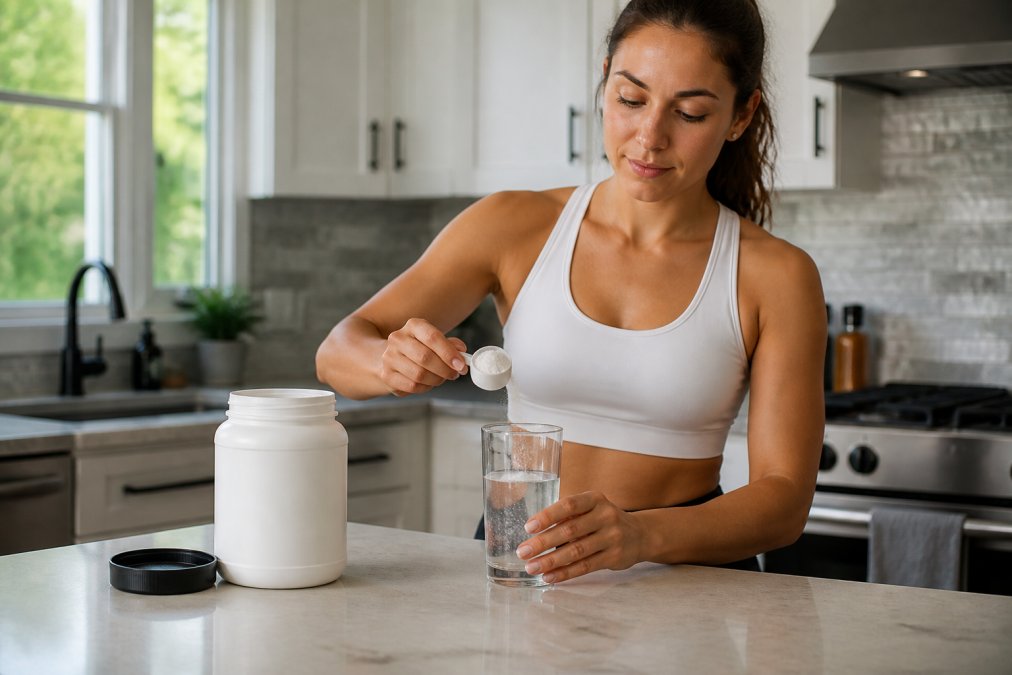
Collagen provides the structural framework for tendons and ligaments, while MSM supplies sulfur for connective tissue repair. As natural collagen production declines with age, hydrolyzed collagen peptides, absorbed more readily than standard collagen, support joint integrity.
For a foundational approach, Global Wellness Alliance Grass-Fed Hydrolyzed Collagen Peptides at $33.90 offers types 1 and 3 collagen in an unflavored powder that dissolves easily in cold water. Those who prefer a flavored option can choose the Chocolate version at $51.90. These products support not only joints but also skin, hair, and nails.
How Long Do Joint Supplements Take to Work?
Most joint supplements require consistent daily use for 4 to 12 weeks before noticeable improvements occur. Patience is critical.
| Supplement Type | Typical Timeline | What to Expect |
|---|---|---|
| Glucosamine & Chondroitin | 6-12 weeks | Gradual improvement in stiffness and flexibility |
| Turmeric & Boswellia | 4-8 weeks | Noticeable reduction in discomfort and swelling |
| Collagen Peptides | 8-12 weeks | Improved joint comfort and connective tissue support |
The Best Practices for Joint Health Beyond Supplements
Supplements are one pillar of a joint recovery protocol; the other two are targeted movement and dietary patterns. Below is a practical framework for integrating them into a daily routine.
The Anti-Inflammatory Plate: What to Eat (and Avoid) While Supplementing
A supplement cannot outwork a diet high in refined sugars and processed seed oils, which drive the inflammation that curcumin and omega-3s try to suppress. Remove the constant stimulus so supplements can work.
Build each meal around these four principles:
- Fatty fish three times per week. Salmon, sardines, and mackerel provide EPA and DHA, the same omega-3s found in fish oil supplements. If you are taking a fish oil capsule, eating fish on top of that may push your total intake too high. Track your combined intake and stay under 3 grams of combined EPA/DHA per day.
- Colorful vegetables at every meal. Dark leafy greens, broccoli, and bell peppers supply antioxidants that scavenge free radicals produced during joint inflammation. Aim for at least 2 cups at lunch and dinner.
- Limit added sugar to under 25 grams per day. The American Heart Association recommends this ceiling for women, and the limit for men is 36 grams. Sugar spikes trigger inflammatory cytokine release, counteracting the anti-inflammatory action of turmeric and Boswellia.
- Choose olive oil as your primary cooking fat. Extra virgin olive oil contains oleocanthal, a compound with COX-inhibitory properties similar to ibuprofen, though at a much lower potency. It is complementary, not a replacement, for your supplements.
The Movement Protocol: Exercises That Support Supplement Absorption
Supplements deliver building blocks to the bloodstream, but they cannot force nutrients into cartilage. Joint loading through movement stimulates synovial fluid production and nutrient diffusion; without it, even the best collagen has nowhere to go.
A practical weekly movement schedule for joint recovery:
| Day | Activity | Duration | Purpose |
|---|---|---|---|
| Monday | Walking or cycling at moderate effort | 30 minutes | Joint lubrication and synovial fluid circulation |
| Tuesday | Resistance training (leg press, rows, push-ups) | 40 minutes | Strengthen muscles that stabilize the joint |
| Wednesday | Swimming or water aerobics | 30 minutes | Low-impact movement with zero joint compression |
| Thursday | Yoga or dedicated stretching routine | 30 minutes | Maintain range of motion and tendon flexibility |
| Friday | Walking or cycling | 30 minutes | Active recovery and blood flow |
| Saturday | Resistance training (focus on form and controlled tempo) | 40 minutes | Build strength without explosive loading |
| Sunday | Rest or gentle walking | 20 minutes | Recovery and tissue repair |
Hydration: The Overlooked Variable for Synovial Fluid
Synovial fluid is approximately 85% water; chronic dehydration reduces its volume, making joints feel stiffer. The National Academy of Medicine recommends about 3.7 liters of daily water for men and 2.7 for women; add 500-1000 mL per hour of exercise if active or in a warm climate.
A simple hydration check: Your urine should be pale yellow, not dark amber. Dark urine indicates you are behind on fluids, and your synovial fluid is likely affected.
How to Layer Topical and Oral Products for Post-Workout Recovery
For post-workout soreness, a topical option like Global Wellness Alliance Polar Flex Cooling Gel at $16.50 provides localized relief while oral supplements work systemically. Apply the gel within 30 minutes after exercise. The cooling effect reduces acute inflammation, while oral collagen and turmeric address underlying tissue repair, this two-pronged approach is more effective than either alone.
Beetroot Capsules at $20.90 support nitric oxide production, improving blood flow and oxygen delivery to active muscles. Take them 2-3 hours before exercise for endurance and post-workout circulation. This is not joint-specific, but improved blood flow supports nutrient delivery from your other supplements.
The Weekly Check-In: Tracking Progress Objectively
Subjective feelings of "less pain" are unreliable. Track these three metrics weekly:
- Morning stiffness duration: How many minutes after waking before your joints feel loose?
- Pain rating on a 0-10 scale: Rate your worst joint after the same activity each week (e.g., after climbing stairs).
- Range of motion: Measure the distance you can reach or the angle you can bend a specific joint. Use a tape measure or a goniometer app on your phone.
If after 12 weeks you see no improvement, the issue is likely under-dosed supplements, wrong ingredients, or lifestyle factors. Re-evaluate each variable before spending more.
Safety, Interactions, and Third-Party Testing Standards
Before adding any supplement, a conversation with your healthcare provider is non-negotiable, especially with a chronic condition or prescriptions. The sections below cover specific drug interactions and verifying what is in the bottle.
Common Drug-Supplement Interactions You Need to Know
The table below outlines the most clinically relevant interactions for the ingredients discussed in this guide.
| Supplement Ingredient | Interacting Medication Class | Potential Effect | Practical Guidance |
|---|---|---|---|
| Glucosamine | Warfarin (Coumadin) and other blood thinners | May potentiate the anticoagulant effect, increasing bleeding risk | Monitor INR closely if combined; your doctor may need to adjust your warfarin dose |
| Glucosamine | Insulin and oral diabetes medications (e.g., Metformin) | May alter blood sugar control and insulin sensitivity | Check blood glucose more frequently when starting or stopping; adjust medication only under medical supervision |
| Turmeric/Curcumin | Antiplatelet drugs (e.g., Clopidogrel, Aspirin) | Can add to the antiplatelet effect, raising bleeding risk | Avoid high-dose curcumin extracts if you take daily aspirin therapy unless cleared by your doctor |
| Turmeric/Curcumin | NSAIDs (e.g., Ibuprofen, Naproxen) | May increase the risk of gastrointestinal bleeding when taken together | Separate doses by at least 4 hours; consider enteric-coated formulations |
| Boswellia | Leukotriene inhibitors (e.g., Zileuton) | Theoretical additive effect on the inflammatory pathway | Discuss with a pharmacist; no standard monitoring exists, but caution is advised |
| Fish Oil/Omega-3 | Warfarin and other anticoagulants | High doses (over 3g/day) may prolong bleeding time | Keep omega-3 intake below 3g combined EPA/DHA if on anticoagulants; disclose your dose to your doctor |
| MSM | No major documented interactions | Generally well-tolerated | Still disclose to your provider, especially if you have a bleeding disorder |
How to Verify Third-Party Testing: Beyond the Label Claim
Dietary supplements are regulated by the FDA as foods, not drugs, so the agency does not review products before they hit the market. The burden falls on the manufacturer, making third-party testing the only reliable signal of quality, but not all such testing is equal.
Look for these specific seals, not generic "third-party tested" language:
- USP Verified: The United States Pharmacopeia seal indicates the product passed testing for purity, potency, and contaminant limits. USP also audits manufacturing facilities for GMP compliance. This is the gold standard for dietary supplements.
- NSF Certified for Sport: This seal is designed for athletes and confirms the product is free of over 200 banned substances, including stimulants and anabolic agents. It also verifies label accuracy.
- Informed Choice: Similar to NSF for Sport, this program tests every batch for banned substances and maintains a publicly searchable list of certified products.
Red flags that indicate a certification claim is weak or misleading:
- The label says "lab tested" or "third-party tested" but does not name the specific organization. This is a marketing phrase, not a certification.
- The seal belongs to a private, for-profit company that does not publish its testing standards or does not conduct batch-by-batch testing.
- The product carries a "GMP Certified" seal. GMP is a manufacturing requirement, not a product quality certification. Every legal supplement manufacturer must follow GMP. This seal adds no independent verification.
How to verify a seal is genuine:
- Go to the certifying organization's website (USP.org, NSF.org, or InformedChoice.org).
- Search their verified product database using the exact product name and manufacturer.
- Confirm the lot number on your bottle matches the lot number listed in the database, if the organization provides that level of detail.
The FDA Regulatory Framework in Plain Language
The FDA guidance on dietary supplements explains that manufacturers are responsible for ensuring their products are safe and that label claims are truthful and not misleading. However, the FDA does not approve supplements before they are sold. The agency can only take action after a product reaches the market and is found to be unsafe or misbranded. This is why the National Institutes of Health fact sheets and the Cochrane Library reviews are essential resources, they provide independent, evidence-based assessments that do not rely on manufacturer-funded research.
What to Do If You Experience an Adverse Event
If you suspect a supplement is causing side effects, stop taking it immediately and report the incident to the FDA through the FDA Safety Reporting Portal. This reporting system helps regulators identify emerging safety issues that were not caught during pre-market review. Your report can contribute to a product recall or a safety warning that protects other consumers.
Frequently Asked Questions
Is there a joint supplement that actually works?
Clinical trials show the most consistent results for joint recovery supplements containing glucosamine, chondroitin, and turmeric. The evidence is strongest for reducing joint stiffness and discomfort, not for regrowing cartilage. Look for products with standardized extracts, like Boswellia standardized to 65% boswellic acids, and give them at least 8 to 12 weeks before judging results. A supplement that combines these ingredients, such as GWA's Joint Support, offers a convenient way to cover the core compounds.
How long do joint supplements take to work?
Most joint recovery supplements take 4 to 12 weeks of daily use to produce noticeable changes in joint mobility and stiffness. Glucosamine and chondroitin typically require the longest timeline, often 8 to 12 weeks, because they work slowly on cartilage. Turmeric and Boswellia may offer faster relief from discomfort, sometimes within 4 to 6 weeks. Consistency matters more than dosage timing, so take your supplement daily and track your symptoms to measure progress.
Which 3 supplements fight chronic inflammation?
Turmeric, Boswellia, and Omega-3 fatty acids are the three most studied natural anti-inflammatory supplements. Turmeric's active compound, curcumin, has shown effects on inflammation markers in placebo-controlled trials. Boswellia serrata extract contains boswellic acids that may support joint mobility. Omega-3s from fish oil help manage systemic inflammation. For a targeted approach, products like Platinum Turmeric combine turmeric with Boswellia, ginger, and other extracts for broader support.
Are joint supplements FDA-regulated for safety and efficacy?
The FDA regulates joint supplements as dietary supplements, not drugs. This means manufacturers are responsible for product safety and label accuracy, but the FDA does not review products for efficacy before they reach the market. Choose supplements from brands that use third-party testing to verify purity and ingredient amounts. Also check for certification seals and transparent labeling, which indicate a manufacturer following current Good Manufacturing Practices (cGMP).
Finding the right path to joint recovery requires filtering through a lot of noise, but the core principles are clear: choose standardized ingredients, give them time to work, and pair them with smart lifestyle habits. Global Wellness Alliance offers a curated range of supplements like Joint Support and Platinum Turmeric, born from a founder's personal experience with recovery and a commitment to real impact. Explore the full collection to support your body, mind, and daily performance.